ABOUT US
01.
Fascial Relational Anatomy
01.
Fascial Relational Anatomy
02.
Tensegritive Biomechanics
02.
Tensegritive Biomechanics
03.
Complexity Philosophy
03.
Complexity Philosophy
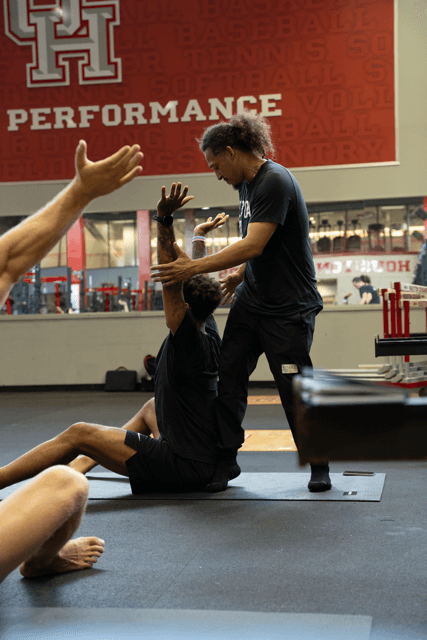
ELDOA (Étirements Longitudinaux avec Décoaptation Ostéo-Articulaire) is a precise neuromechanical method designed to create specific osteo-articular decompression through intentional myofascial tension.
Science Meets Body Restoration

PROGRAMS
Core Technical Principles
Segmental Specificity each posture corresponds to a clearly defined anatomical segment. Small changes in position alter the mechanical outcome. Active Myofascial Tension decompression is created through active tension in the fascial system, not through external force or leverage. Neurological Engagement attention, intent, and breathing are integral to the posture’s effect. Without them, the posture becomes mechanical and imprecise. Postural Organization the entire body participates in each ELDOA posture. Compensation anywhere in the chain reduces effectiveness at the target segment. Time Under Tension ELDOA postures are held, not repeated. Time allows neurological and fascial responses to occur.
WHY CHOOSE US
A Platform Built on Trust and Transparency
Verified Impact & Measurable Results
Access private educational content and training courses.
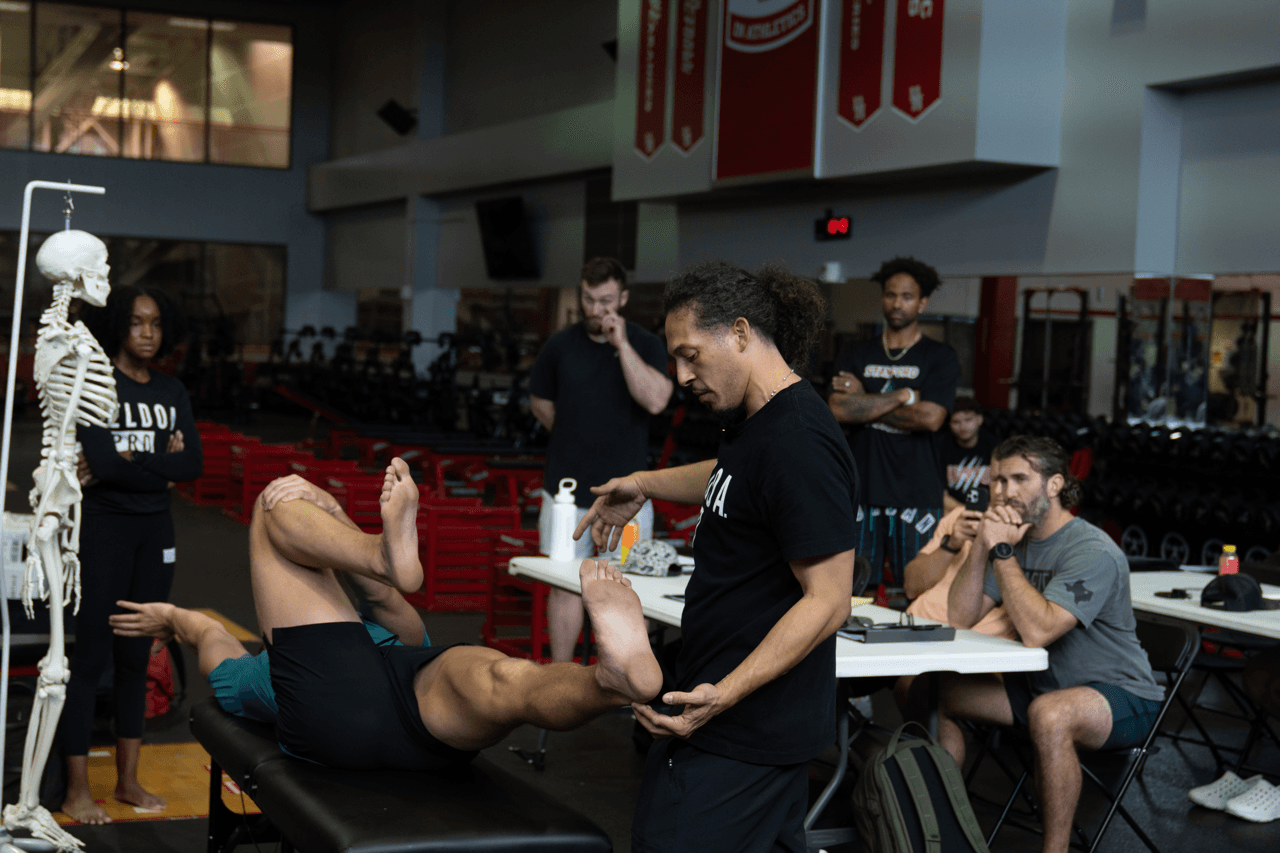
Online Education & Live Workshops
Refinement of technique and real world application.
ORGIN
Philisophy from Our Founders
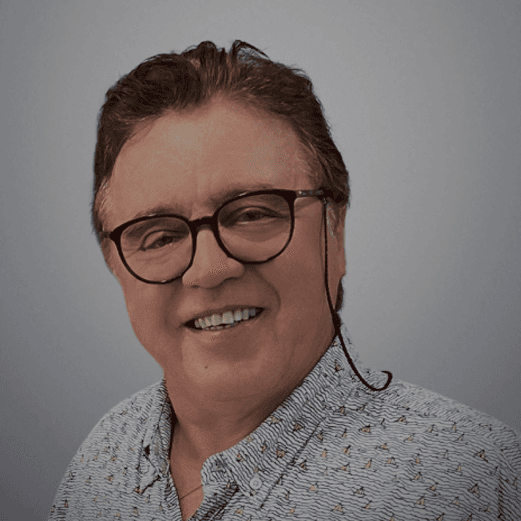
Guy Voyer developed ELDOA after observing that most body-based approaches were too general to resolve specific mechanical problems. While studying widespread back pain in Europe, he found that existing medical and exercise methods failed to address precise joint or spinal compression. Through biomechanics and tensegrity, he came to understand the body as a global system where compression is a key source of pain and dysfunction. ELDOA was created to act directly on these specific compressions using intentional posture, myofascial tension, breathing, and neurological engagement. It is not a set of stretches, but a precise neuromechanical method focused on quality, deep study, and respect for the body’s complexity.
Dr. Guy Voyer
Doctor / Founding Practioner
Guy Voyer developed ELDOA after observing that most body-based approaches were too general to resolve specific mechanical problems. While studying widespread back pain in Europe, he found that existing medical and exercise methods failed to address precise joint or spinal compression. Through biomechanics and tensegrity, he came to understand the body as a global system where compression is a key source of pain and dysfunction. ELDOA was created to act directly on these specific compressions using intentional posture, myofascial tension, breathing, and neurological engagement. It is not a set of stretches, but a precise neuromechanical method focused on quality, deep study, and respect for the body’s complexity.
Dr. Guy Voyer
Doctor / Founding Practioner
Guy Voyer developed ELDOA after observing that most body-based approaches were too general to resolve specific mechanical problems. While studying widespread back pain in Europe, he found that existing medical and exercise methods failed to address precise joint or spinal compression. Through biomechanics and tensegrity, he came to understand the body as a global system where compression is a key source of pain and dysfunction. ELDOA was created to act directly on these specific compressions using intentional posture, myofascial tension, breathing, and neurological engagement. It is not a set of stretches, but a precise neuromechanical method focused on quality, deep study, and respect for the body’s complexity.
Dr. Guy Voyer
Doctor / Founding Practioner
Guy Voyer developed ELDOA after observing that most body-based approaches were too general to resolve specific mechanical problems. While studying widespread back pain in Europe, he found that existing medical and exercise methods failed to address precise joint or spinal compression. Through biomechanics and tensegrity, he came to understand the body as a global system where compression is a key source of pain and dysfunction. ELDOA was created to act directly on these specific compressions using intentional posture, myofascial tension, breathing, and neurological engagement. It is not a set of stretches, but a precise neuromechanical method focused on quality, deep study, and respect for the body’s complexity.
Dr. Guy Voyer
Doctor / Founding Practioner
Guy Voyer developed ELDOA after observing that most body-based approaches were too general to resolve specific mechanical problems. While studying widespread back pain in Europe, he found that existing medical and exercise methods failed to address precise joint or spinal compression. Through biomechanics and tensegrity, he came to understand the body as a global system where compression is a key source of pain and dysfunction. ELDOA was created to act directly on these specific compressions using intentional posture, myofascial tension, breathing, and neurological engagement. It is not a set of stretches, but a precise neuromechanical method focused on quality, deep study, and respect for the body’s complexity.
Dr. Guy Voyer
Doctor / Founding Practioner
Guy Voyer developed ELDOA after observing that most body-based approaches were too general to resolve specific mechanical problems. While studying widespread back pain in Europe, he found that existing medical and exercise methods failed to address precise joint or spinal compression. Through biomechanics and tensegrity, he came to understand the body as a global system where compression is a key source of pain and dysfunction. ELDOA was created to act directly on these specific compressions using intentional posture, myofascial tension, breathing, and neurological engagement. It is not a set of stretches, but a precise neuromechanical method focused on quality, deep study, and respect for the body’s complexity.
Dr. Guy Voyer
Doctor / Founding Practioner
Guy Voyer developed ELDOA after observing that most body-based approaches were too general to resolve specific mechanical problems. While studying widespread back pain in Europe, he found that existing medical and exercise methods failed to address precise joint or spinal compression. Through biomechanics and tensegrity, he came to understand the body as a global system where compression is a key source of pain and dysfunction. ELDOA was created to act directly on these specific compressions using intentional posture, myofascial tension, breathing, and neurological engagement. It is not a set of stretches, but a precise neuromechanical method focused on quality, deep study, and respect for the body’s complexity.
Dr. Guy Voyer
Doctor / Founding Practioner
Guy Voyer developed ELDOA after observing that most body-based approaches were too general to resolve specific mechanical problems. While studying widespread back pain in Europe, he found that existing medical and exercise methods failed to address precise joint or spinal compression. Through biomechanics and tensegrity, he came to understand the body as a global system where compression is a key source of pain and dysfunction. ELDOA was created to act directly on these specific compressions using intentional posture, myofascial tension, breathing, and neurological engagement. It is not a set of stretches, but a precise neuromechanical method focused on quality, deep study, and respect for the body’s complexity.
Dr. Guy Voyer
Doctor / Founding Practioner
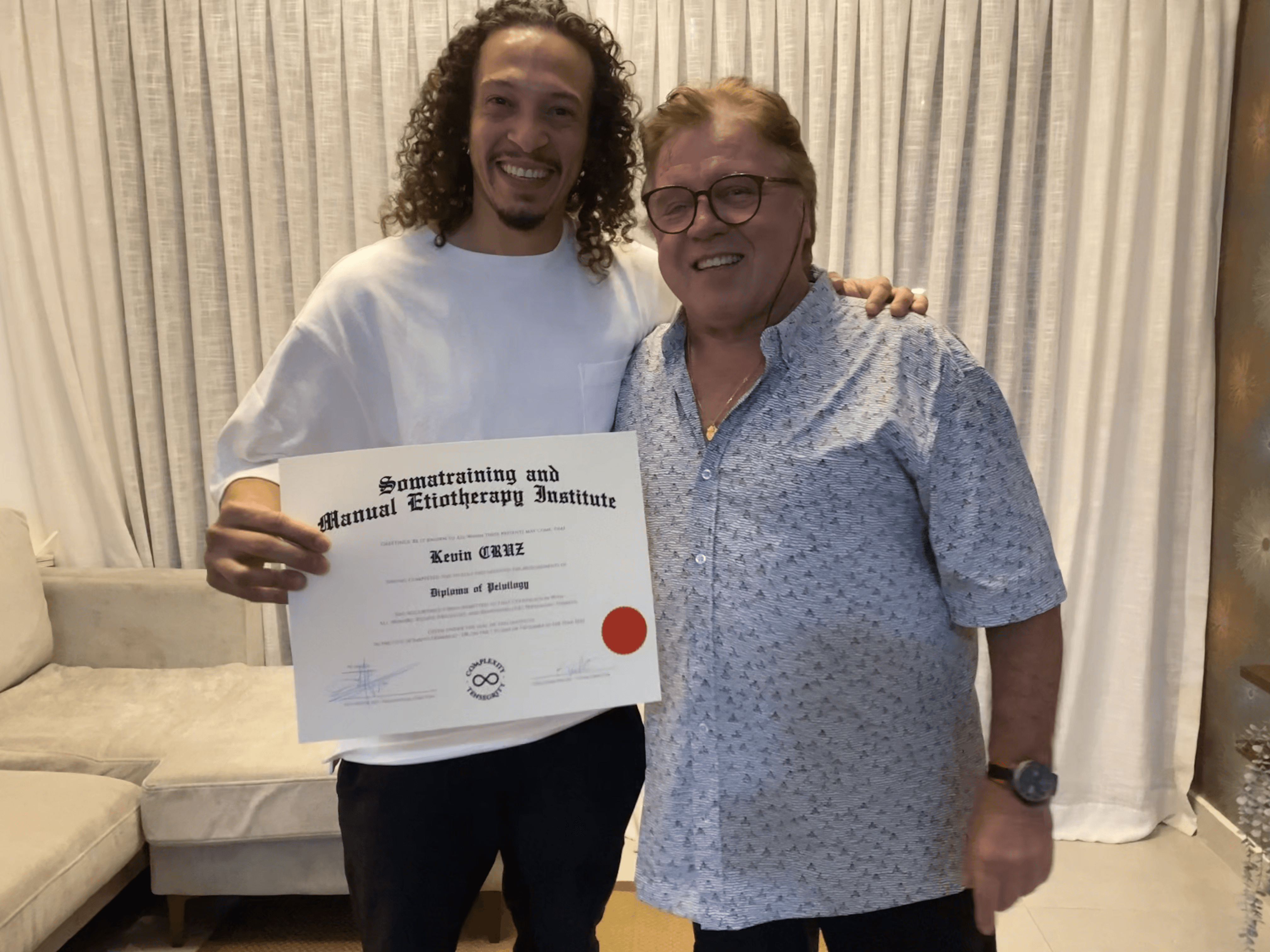
The work I teach today is grounded in what I learned directly from Guy Voyer, including both the techniques and the way of thinking behind them. He taught that ELDOA is not about performing shapes, but about structure, intent, and precise, segment-by-segment application. I carry these principles forward by emphasizing anatomical understanding, correct execution, and intelligent adaptation to real-world contexts. Through experience with athletes, professionals, and individuals in pain, I have integrated ELDOA with complementary methods while respecting its original philosophy. ELDOA PRO exists to continue this work through thoughtful study, critical thinking, and responsible application.
Kevin Cruz
ELDOA Succesor
The work I teach today is grounded in what I learned directly from Guy Voyer, including both the techniques and the way of thinking behind them. He taught that ELDOA is not about performing shapes, but about structure, intent, and precise, segment-by-segment application. I carry these principles forward by emphasizing anatomical understanding, correct execution, and intelligent adaptation to real-world contexts. Through experience with athletes, professionals, and individuals in pain, I have integrated ELDOA with complementary methods while respecting its original philosophy. ELDOA PRO exists to continue this work through thoughtful study, critical thinking, and responsible application.
Kevin Cruz
ELDOA Succesor
The work I teach today is grounded in what I learned directly from Guy Voyer, including both the techniques and the way of thinking behind them. He taught that ELDOA is not about performing shapes, but about structure, intent, and precise, segment-by-segment application. I carry these principles forward by emphasizing anatomical understanding, correct execution, and intelligent adaptation to real-world contexts. Through experience with athletes, professionals, and individuals in pain, I have integrated ELDOA with complementary methods while respecting its original philosophy. ELDOA PRO exists to continue this work through thoughtful study, critical thinking, and responsible application.
Kevin Cruz
ELDOA Succesor
The work I teach today is grounded in what I learned directly from Guy Voyer, including both the techniques and the way of thinking behind them. He taught that ELDOA is not about performing shapes, but about structure, intent, and precise, segment-by-segment application. I carry these principles forward by emphasizing anatomical understanding, correct execution, and intelligent adaptation to real-world contexts. Through experience with athletes, professionals, and individuals in pain, I have integrated ELDOA with complementary methods while respecting its original philosophy. ELDOA PRO exists to continue this work through thoughtful study, critical thinking, and responsible application.
Kevin Cruz
ELDOA Succesor
The work I teach today is grounded in what I learned directly from Guy Voyer, including both the techniques and the way of thinking behind them. He taught that ELDOA is not about performing shapes, but about structure, intent, and precise, segment-by-segment application. I carry these principles forward by emphasizing anatomical understanding, correct execution, and intelligent adaptation to real-world contexts. Through experience with athletes, professionals, and individuals in pain, I have integrated ELDOA with complementary methods while respecting its original philosophy. ELDOA PRO exists to continue this work through thoughtful study, critical thinking, and responsible application.
Kevin Cruz
ELDOA Succesor
The work I teach today is grounded in what I learned directly from Guy Voyer, including both the techniques and the way of thinking behind them. He taught that ELDOA is not about performing shapes, but about structure, intent, and precise, segment-by-segment application. I carry these principles forward by emphasizing anatomical understanding, correct execution, and intelligent adaptation to real-world contexts. Through experience with athletes, professionals, and individuals in pain, I have integrated ELDOA with complementary methods while respecting its original philosophy. ELDOA PRO exists to continue this work through thoughtful study, critical thinking, and responsible application.
Kevin Cruz
ELDOA Succesor
The work I teach today is grounded in what I learned directly from Guy Voyer, including both the techniques and the way of thinking behind them. He taught that ELDOA is not about performing shapes, but about structure, intent, and precise, segment-by-segment application. I carry these principles forward by emphasizing anatomical understanding, correct execution, and intelligent adaptation to real-world contexts. Through experience with athletes, professionals, and individuals in pain, I have integrated ELDOA with complementary methods while respecting its original philosophy. ELDOA PRO exists to continue this work through thoughtful study, critical thinking, and responsible application.
Kevin Cruz
ELDOA Succesor
The work I teach today is grounded in what I learned directly from Guy Voyer, including both the techniques and the way of thinking behind them. He taught that ELDOA is not about performing shapes, but about structure, intent, and precise, segment-by-segment application. I carry these principles forward by emphasizing anatomical understanding, correct execution, and intelligent adaptation to real-world contexts. Through experience with athletes, professionals, and individuals in pain, I have integrated ELDOA with complementary methods while respecting its original philosophy. ELDOA PRO exists to continue this work through thoughtful study, critical thinking, and responsible application.
Kevin Cruz
ELDOA Succesor
The work I teach today is grounded in what I learned directly from Guy Voyer, including both the techniques and the way of thinking behind them. He taught that ELDOA is not about performing shapes, but about structure, intent, and precise, segment-by-segment application. I carry these principles forward by emphasizing anatomical understanding, correct execution, and intelligent adaptation to real-world contexts. Through experience with athletes, professionals, and individuals in pain, I have integrated ELDOA with complementary methods while respecting its original philosophy. ELDOA PRO exists to continue this work through thoughtful study, critical thinking, and responsible application.
Kevin Cruz
ELDOA Succesor
The work I teach today is grounded in what I learned directly from Guy Voyer, including both the techniques and the way of thinking behind them. He taught that ELDOA is not about performing shapes, but about structure, intent, and precise, segment-by-segment application. I carry these principles forward by emphasizing anatomical understanding, correct execution, and intelligent adaptation to real-world contexts. Through experience with athletes, professionals, and individuals in pain, I have integrated ELDOA with complementary methods while respecting its original philosophy. ELDOA PRO exists to continue this work through thoughtful study, critical thinking, and responsible application.
Kevin Cruz
ELDOA Succesor
The work I teach today is grounded in what I learned directly from Guy Voyer, including both the techniques and the way of thinking behind them. He taught that ELDOA is not about performing shapes, but about structure, intent, and precise, segment-by-segment application. I carry these principles forward by emphasizing anatomical understanding, correct execution, and intelligent adaptation to real-world contexts. Through experience with athletes, professionals, and individuals in pain, I have integrated ELDOA with complementary methods while respecting its original philosophy. ELDOA PRO exists to continue this work through thoughtful study, critical thinking, and responsible application.
Kevin Cruz
ELDOA Succesor
The work I teach today is grounded in what I learned directly from Guy Voyer, including both the techniques and the way of thinking behind them. He taught that ELDOA is not about performing shapes, but about structure, intent, and precise, segment-by-segment application. I carry these principles forward by emphasizing anatomical understanding, correct execution, and intelligent adaptation to real-world contexts. Through experience with athletes, professionals, and individuals in pain, I have integrated ELDOA with complementary methods while respecting its original philosophy. ELDOA PRO exists to continue this work through thoughtful study, critical thinking, and responsible application.
Kevin Cruz
ELDOA Succesor
UPCOMING
Workshops
ELDOA + Myofascial Stretching -Movement, Recovery & Durability for High-Performance Athletes
Foundational ELDOA postures
How to decompress the spine and improve disc hydration
The role of tensegrity, posture, and fascia in movement
How to coach and correct these postures effectively Includes ELDOA Student Practitioner Level 1 certification
PRICING
Private Educational and Training Access
Monthly
Yearly
Direct Continuity of the Method
Extensive Video Library & Exclusive Material
Structured, System-Based Education
Ongoing Guidance & Private Professional Community
Monthly
Yearly
Direct Continuity of the Method
Extensive Video Library & Exclusive Material
Structured, System-Based Education
Ongoing Guidance & Private Professional Community
FAQs